
A redesign usually gets approved for the wrong reason.
Someone is tired of the homepage. A stakeholder wants a more modern look. A competitor launched a cleaner site. Meanwhile, the real problems are sitting somewhere else – poor mobile navigation, category pages that bury products, a checkout experience that creates hesitation, or a theme setup that makes every change harder than it should be.
That is why BigCommerce redesign services should never start with mockups. They should start with diagnosis. If your store already has traffic, products, and customers, a redesign is not an art project. It is an operational decision that needs to improve conversion, usability, and maintainability without creating new problems.
What BigCommerce redesign services should actually solve
A good redesign fixes the parts of the store that are slowing the business down. Sometimes that is the customer experience. Sometimes it is the internal workflow. Often it is both.
For one merchant, the issue is a theme that looks acceptable but performs badly on mobile. For another, the store has grown past the original setup and now category structure, filters, and product page content are fighting the catalog instead of supporting it. B2B merchants often hit a different wall, where the site needs to communicate account-based purchasing, quote workflows, or customer-specific pricing more clearly.
The point is simple. A redesign should have a job.
If the job is to improve conversion rate, the work needs to focus on buying friction. If the job is to support a rebrand, the visual update still has to preserve usability and search equity. If the job is to make the store easier to manage, theme changes and template decisions need to reduce future maintenance, not add more custom complexity.
That is where many redesign projects go sideways. Merchants pay for a visual refresh and end up inheriting fresh technical debt.
The difference between a redesign and a reskin
Not every store needs a full redesign. Some need a controlled reskin. That distinction matters because it affects budget, timeline, and risk.
A reskin updates branding, typography, color use, imagery, and selected page layouts while keeping the underlying structure mostly intact. This can work well when the current theme is fundamentally sound and the user journey does not need major surgery.
A redesign goes deeper. It rethinks navigation, page hierarchy, content blocks, merchandising logic, mobile behavior, and often theme architecture. It may also involve template cleanup, app review, custom functionality planning, and a hard look at what should be removed.
Merchants often ask for the second when they really need the first, or vice versa. If your store has decent conversion performance but looks dated, a lighter approach may be smarter. If customers cannot find products, bounce on mobile, or struggle through bloated page templates, changing the brand layer alone will not fix much.
How to know your store is ready for a redesign
The strongest case for redesign is not aesthetic fatigue. It is repeated evidence that the current setup is getting in the way.
That evidence shows up in familiar places. Mobile revenue lags behind expectations. Important categories have high exit rates. Search and filtering do not help shoppers narrow choices. Product pages answer some questions but miss the ones that actually affect buying decisions. Promotions feel bolted on. The store works, but not cleanly.
You may also feel it internally. Merchandising updates take too long. Content changes require workarounds. The theme is so customized or poorly organized that no one wants to touch it. Basic improvements turn into mini-projects because the store lacks structure.
That is usually the moment to consider BigCommerce redesign services seriously. Not because redesign is exciting, but because the cost of leaving things alone is starting to compound.
What a smart redesign process looks like
A disciplined redesign starts by deciding what should not change.
That includes URLs that matter for SEO, functional elements customers already understand, and content that is already helping conversion. Redesign does not mean resetting everything. Strong projects protect what is working and focus effort where it will produce measurable gains.
From there, the work should move through review, prioritization, and scoped implementation. Review means auditing analytics, storefront behavior, theme limitations, app overlap, and business goals. Prioritization means separating critical fixes from nice-to-have ideas. Scoped implementation means knowing exactly what will be changed, in what order, and why.
This is where merchants benefit from working directly with a senior BigCommerce expert instead of being routed through layers of agency process. Redesign work has too many business-specific decisions for filtered communication. The more direct the workflow, the less likely the project drifts into vague creative territory or unnecessary revision cycles.
A practical redesign process usually covers homepage strategy, navigation and mega menu structure, collection and category layouts, search behavior, product page hierarchy, trust and conversion elements, mobile-specific adjustments, and theme-level performance considerations. Depending on the store, it may also include custom page templates, B2B functionality planning, or a review of how third-party apps affect the front end.
What merchants often get wrong about redesign projects
The biggest mistake is treating redesign as a fresh start.
Established stores already have data, customer habits, ranking signals, and operational realities. Ignoring those in favor of a dramatic visual reinvention is expensive and rarely necessary. Better redesigns are more disciplined than dramatic.
The second mistake is trying to solve every business problem through design. Design matters, but it cannot compensate for weak product content, poor pricing strategy, confusing shipping policies, or bad merchandising decisions. A redesign can improve how those things are presented. It cannot fix the underlying offer.
The third mistake is over-customizing too early. BigCommerce is flexible, but flexibility should be used with restraint. Custom work is justified when it supports a clear business need. It is a liability when it exists only to mimic another brand’s storefront or satisfy a preference with no measurable upside.
Where the best BigCommerce redesign services add real value
The real value is not in producing prettier comps. It is in making good decisions before code gets touched.
That means identifying whether your current theme can be improved or whether it is holding the project back. It means deciding which pages deserve custom treatment and which should stay standardized for speed and consistency. It means spotting where app bloat is slowing the site or creating overlapping functions. It means planning around BigCommerce capabilities instead of promising a custom build that will be costly to maintain.
It also means understanding merchant operations, not just storefront design. If your team updates products daily, the redesign should support efficient merchandising. If your catalog is complex, category logic and filtering matter more than decorative homepage sections. If your buyers are repeat purchasers, speed to product matters more than brand storytelling.
That is the difference between design work and redesign strategy. One changes the appearance. The other improves the store.
Why direct execution matters on redesign work
Redesign projects create risk when ownership gets diluted.
If discovery is handled by one person, design by another, development by someone else, and strategy by whoever joins the next call, details get lost. Merchants end up repeating context, correcting assumptions, and waiting while project momentum disappears into internal handoffs.
That is one reason the solo expert model works well for BigCommerce work. When the same specialist evaluates the store, scopes the work, and executes the changes, decisions stay connected to the original business problem. The process is tighter. Communication is cleaner. Progress is easier to see.
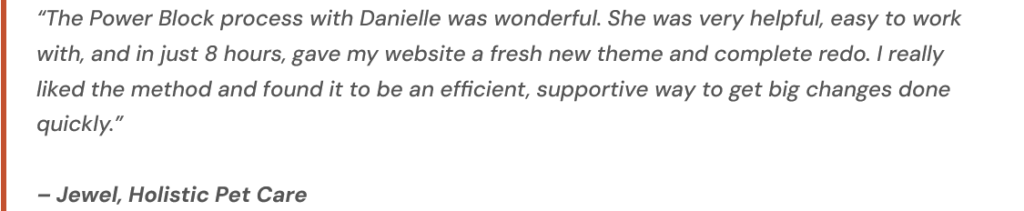
At Duck Soup E-Commerce, that shows up in fixed-scope work structured around focused Power Block sessions rather than vague timelines and padded retainers. For merchants who are tired of agency drift, that level of control matters.
What to expect after the redesign goes live
Launch is not the finish line. It is the point where the next round of useful data starts coming in.
Some improvements should be visible quickly, especially around navigation, mobile usability, and content clarity. Other results take longer. Category changes need traffic. Product page adjustments need enough sessions to reveal patterns. Search behavior may improve only after merchandising and synonym tuning catch up.
This is why the best redesigns leave room for post-launch refinement. You do not need endless optimization work, but you do need a plan to monitor performance, fix edge cases, and adjust based on how real customers use the updated store.
If you are considering BigCommerce redesign services, the right question is not, “How do we make the site look better?” It is, “What is the store failing to do right now, and what changes will solve that without creating more overhead?”
That question leads to better projects, better decisions, and stores that work harder after launch than they did before.
Looking to refresh your BigCommerce store? Contact me and let’s discuss your project.
Sales in a slump?
Get instant access to the Conversion Boosting Self-Audit, proven to identify order-blocking issues on your website.
Plus, you'll get periodic tips, tools and exclusive offers designed to help grow your e-commerce business. Unsubscribe any time.
