
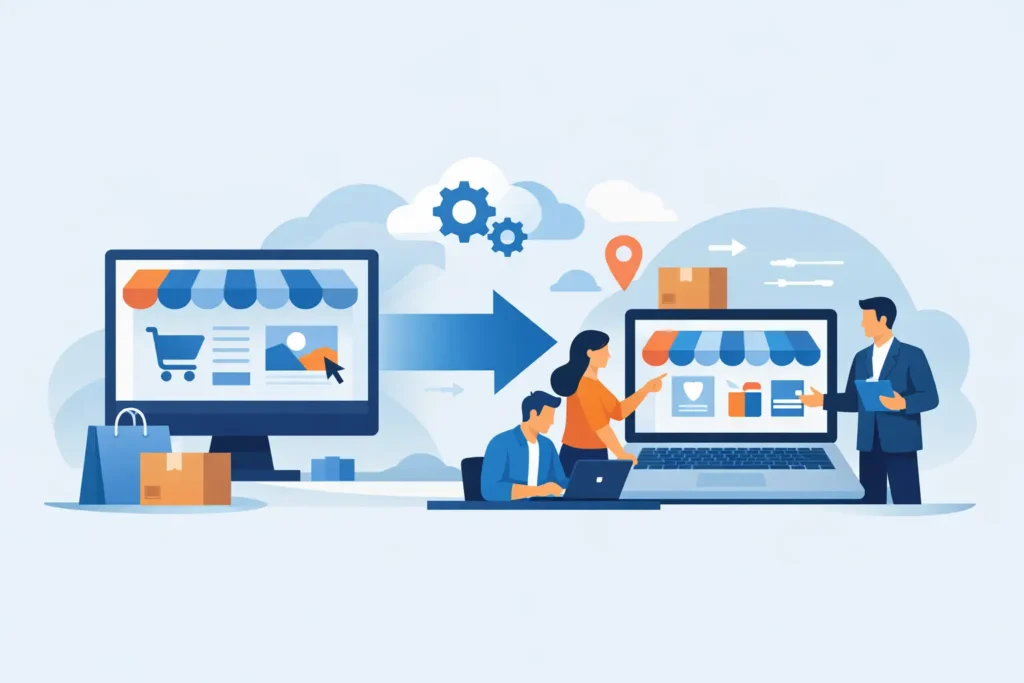
Moving to a new platform can seem workable until you start getting into the details of your existing website. Product data is often inconsistent, categories have grown messy over time, customer records need cleanup, redirects matter more than anyone realized, and third-party apps are holding together key parts of daily operations. That is exactly where a BigCommerce migration agency can proves its value, or creates expensive confusion.
If you’re moving to BigCommerce from Shopify, Magento, WooCommerce, Volusion, or a custom cart, the platform switch is only part of the job. The real work is protecting revenue, preserving operational continuity, and making sure the new BigCommerce store is better organized than the one you’re leaving behind. What you don’t need are vague strategy decks. You need senior-level judgment, clean execution, and a plan that accounts for what can actually go wrong.
What a BigCommerce migration agency is really responsible for
A migration is not a copy-paste exercise. It is a structured rebuild of every part of your store, including design, fulfillment, the customer experience, and SEO.
That means product data has to be mapped correctly, not just imported. Variants, modifiers, product rules, category structure, brand assignments, pricing logic, and customer groups all need to be reviewed before anything goes live. If you move bad data or a messy structure to a new platform, you aren’t going to benefit from a fresh start. You’re just rebuilding all the same problems you had on your old website.
A capable agency should also look beyond catalog data. They should have a plan to migrate your order history, customer accounts, content pages, blog posts, reviews, discount rules, tax setup, shipping methods, and transactional workflows. Some of these things are straightforward to move. Others might not be so simple. A good agency partner won’t gloss over complexities. They’ll identify possible issues early in the process and walk you through the possible options. Some processes or promotions might need to be changed, while others may be jettisoned entirely. Ultimately, you want an agency that will work with you to determine the best way forward.
Where BigCommerce migration projects usually break down
Most migration problems are not caused by BigCommerce. They come from weak planning, fuzzy ownership, or teams that are too far removed from the actual work being done.
One common issue is overpromising on timeline and scope. Agencies often tell merchants the move will be fairly quick and painless, but then reality kicks in after you’ve started the project. Maybe your existing custom functionality wasn’t documented and needs to be rebuilt from the ground up. You may have to replace apps or create custom connections for 3rd party systems. Without a full discovery process up front, it’s easy for a migration project to quickly feel like it’s gone off the rails.
Another failure point can be poor communication. Critical details can get lost fast if every task has to go through layers of account managers, project coordinators, and junior developers. You might explain a requirement three times, gets three different interpretations back, and ultimately lose confidence in the process. That’s not a minor annoyance. It can directly affect the timeline and the quality of your new store.
Then there is the SEO side of things, which too many teams treat as an afterthought. Redirects, URL structure, metadata, indexable content, canonical logic, and collection architecture can all impact organic traffic after launch. While any migration have some short-term impacts on rankings, a poorly handled one can needlessly tank your organic traffic.
What to expect from a good BigCommerce migration agency
A good BigCommerce migration agency should clearly communicate what transfers well, what needs manual work, and what should be rethought instead of replicated.
That starts with discovery. Before anyone talks about homepage design or launch dates, the agency should understand your catalog complexity, order volume, customer segmentation, integrations, content footprint, and business rules. A B2B store with customer-specific pricing and sales rep workflows is not the same project as a DTC store with a few hundred SKUs. Both can migrate to BigCommerce, but the process should look very different.
A good agency should also provide a clear data migration plan. Not a vague promise to “move everything over,” but a documented understanding of what data is being migrated, how it will be mapped, what needs cleanup first, and what validation steps will happen before launch. Product options, customer accounts, order statuses, gift cards, and historical data retention all need to be discussed.
The build itself should be based on business priorities, not what’s convenient for your agency. That means getting navigation right, making search and filtering useful, configuring shipping and tax logic properly, and setting up the operational details your team will rely on after launch. If your staff cannot manage products, promotions, and day-to-day changes confidently, the migration isn’t truly finished.
Migration is part technical project, part business cleanup
This is the part merchants often underestimate. A platform move forces you to make decisions that you’ve likely been avoiding for years.
You may discover duplicate products, inconsistent naming conventions, outdated categories, old discount structures, or content that no longer matches your brand. Dealing with all of that can feel like extra work, but it’s what ultimately makes the migration worth the time and cost. BigCommerce gives merchants a solid operating foundation, but a migration only pays off if the new store is cleaner and easier to manage than the old one.
But there is a trade-off to consider. If your primary concern is project speed, you might choose a narrower migration scope and then phase improvements in after launch. If cleanup is most critical, the project may take longer because more issues get solved during the move. Neither choice is necessarily right, but it’s something every merchant must decide. The important thing is making that decision deliberately at the beginning, rather than switching gears halfway through the project.
Questions worth asking before you hire a BigCommerce migration agency
The Team: How many people are assigned to your project? What are their roles and who is responsible for what? Are they in-house employees or overseas contractors? Will you have access to speak with different team members directly, or does everything go through one person? If someone leaves the company, do they have enough bandwidth to assign someone else? Who is your primary point of contact?
The How: Merchants are often focused on what’s going to get migrated, but the how is often more important. Will they be importing data via CSV import, using an API or a 3rd party tool? Understanding the how is essential to predicting what might go wrong and what planning is in place to keep momentum going.
The Scope: How will they control the scope of the project? What happens if things come up midway that weren’t expected or budgeted for? What is their workflow, and how do they prioritize all the many tasks that need to be completed? How many changes can you request before additional costs come into play? Are there regular check-ins so you can monitor progress?
The After: Finally, ask what post-launch support looks like. Launch is not the end of the project in any practical sense. Merchants usually need help with QA fixes, team training, merchandising adjustments, app tuning, and conversion-focused improvements once real traffic starts hitting the new store. Make sure you won’t be left without resources once the new store goes live.
Why specialization matters on BigCommerce
Generalist agencies tend to talk about platforms in interchangeable terms. In practice, platform-specific experience matters a lot during migration work.
BigCommerce has its own strengths, constraints, app ecosystem, theme structure, and operational logic. A specialist knows when native features are enough, when customization is justified, and when a merchant is about to overcomplicate the build. That kind of judgment saves time and reduces the risks inherent in any migration.
It also changes the quality of recommendations. A team that lives and breathes BigCommerce can guide decisions around catalog setup, B2B Edition, theme customization, checkout considerations, and app selection with much more confidence than a broad agency trying to cover five platforms at once.
Some merchants prefer a smaller team or a freelance expert over the traditional agency structure. That’s because direct access to an experienced BigCommerce specialist often leads to faster decisions, fewer misunderstandings, and better control over scope. My clients come to me because they understand the benefits of dealing with a single person from start to finish.
Danielle was just great moving my e-commerce store to BigCommerce from Volusion. It was quite a job and everything was moved over quite well and in a very reasonable amount of time.
Drew, Shirt Smart Apparel
The right migration partner should lower risk, not add process
By the time most merchants decide to migrate, they’re usually already tired. They have outgrown an old setup, dealt with operational workarounds for too long, or hit a limit that is affecting growth. The last thing they need is more layers, more meetings, and less clarity.
A good agency brings structure without bloat. It tells you what matters now, what can wait, and what will affect launch quality if ignored. It gives you realistic trade-offs instead of generic reassurance. And it treats the migration as a business-critical move, not just a development project.
If you’re evaluating partners, pay close attention to how they talk about responsibility. The right team will not hide behind jargon or overcomplicate the obvious. They will show you how the work gets done, where the risks are, and what success actually looks like once your new BigCommerce store is live.
The best migration projects feel controlled, not dramatic. That is the standard worth holding out for.
Sales in a slump?
Get instant access to the Conversion Boosting Self-Audit, proven to identify order-blocking issues on your website.
Plus, you'll get periodic tips, tools and exclusive offers designed to help grow your e-commerce business. Unsubscribe any time.
