
TL;DR: Scope creep is when project work expands beyond the original agreement without adjusting budget or timeline. It affects over 50% of ecommerce projects and can increase costs by 20–40%. The biggest causes are vague scopes, slow feedback cycles, and informal requests. The most effective way to prevent it is to define clear deliverables upfront, treat all changes as scoped decisions, track progress against budget weekly, and use structured working models (like session-based work) that…
Duck Soup Blog
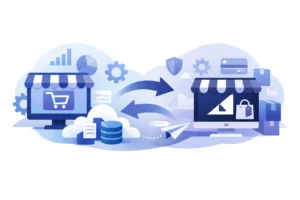
If your Volusion store feels harder to manage than it should, you’re not imagining it. A Volusion to BigCommerce migration is rarely just a platform switch. It’s usually a cleanup project, a UX project, a catalog project, and an operations project bundled into one decision. Merchants who treat it like a simple copy-and-paste job tend to pay for that later in broken data, weak SEO carryover, and launch-week chaos. Why merchants start a volusion to…
Short answer: anywhere from 2 weeks to 4+ months. That’s a big range, and it’s why this question frustrates people. The real answer depends on three things: Most stores fall into a predictable range once you understand those variables. Stores using a pre-built theme with clean product data can launch in 2–4 weeks. On the other end, fully custom builds with integrations can take 12–16+ weeks. A commonly cited benchmark is that semi-custom BigCommerce builds…

If your Magento store has turned into a constant maintenance project, you are not imagining it. A lot of merchants start a Magento to BigCommerce migration only after they have hit the same wall a few too many times – rising development costs, slow updates, fragile customizations, and too much operational energy spent keeping the platform upright instead of growing the business. That frustration is usually justified. But migration is not just a platform swap.…

If your WooCommerce store has turned into a stack of plugins, workarounds, and crossed fingers, the platform is probably no longer the issue by itself. The issue is operational drag. A WooCommerce to BigCommerce migration usually starts when merchants are tired of babysitting updates, patching conflicts, and wondering which plugin broke checkout this time. That frustration is valid, but migration is not a magic reset button. Moving from WooCommerce to BigCommerce can absolutely simplify operations,…

Most Shopify stores do not leave because they woke up craving a new dashboard. They leave because the workarounds keep piling up, the app stack keeps growing, and simple operational changes start feeling expensive. A Shopify to BigCommerce migration usually starts there – not with platform curiosity, but with friction that is costing time, margin, or control. If you are considering a move, the right question is not whether BigCommerce is better in the abstract.…

A replatform project usually looks manageable right up until the details show up. Product data is inconsistent, categories have grown messy over time, customer records need cleanup, redirects matter more than anyone realized, and third-party apps are holding together key parts of daily operations. That is exactly where a bigcommerce migration agency either proves its value or creates expensive confusion. If you’re moving from Shopify, Magento, WooCommerce, Volusion, or a custom cart, the platform switch…
TL;DR: BigCommerce is an Open SaaS e-commerce platform serving 60,000+ merchants with pricing from $39-$399/month based on revenue thresholds, plus custom Enterprise plans. The platform eliminates transaction fees (saving $6,000+ annually at $300K revenue vs Shopify), includes native B2B features unavailable on competing platforms, and supports unlimited products with multi-channel selling. Best for growing B2C stores (100-10K products), B2B sellers needing customer-specific pricing, and merchants migrating from platforms with transaction fees or hosting complexity. Based…
